 Editor's Read
Five Herbs in a Two-Ounce Bottle, Half a Milliliter in a Quarter Cup of Water Three Times a Day, and a Full Year to Send It Back: I Put the Bottle Beside the Only Large Trial of Its Main Herb in People Who Hear a Ringing, and Did the Arithmetic the Listing Didn't
TinnaRex is a forty-dollar bottle of five herbs in vegetable glycerin from Native Remedies of Oshkosh, Wisconsin, sold for healthy ears and clear hearing. I read the label, read the twelve-week trial of 1,121 people that tested its main herb on the ringing itself, read all sixteen reviews, counted the days in the bottle, and read the return terms, which give you a year.

This is a paid advertisement. Sponsored by Silver Star Brands, Inc. (Native Remedies).
Elliot Marsden is the pen name of this desk.
The customers quoted on this page are real; their reviews are public on the seller's product page and were read there on September 10, 2026.
I haven't met them and know nothing about them beyond what they wrote.
The small photos beside three of the reviews are illustrations, not the reviewers.
Everything about the bottle, from the five herbs on the label to the year in the return terms, comes from the seller's own listing and pages, read the same day.
You notice it when the house goes quiet.
The dishwasher finishes, the television goes off, and there it is: a thin, high tone that nobody else in the room can hear.
About one adult in ten in this country heard it in the past year, by the largest survey there is, and four in ten of them called it a small problem. [1]
Most of the people who hear it have lost a little hearing along the way, which is the part no bottle is sold for. [2]
The sound in a quiet room.
This page is about a bottle that is sold for that quiet room, and about the one thing the bottle's own seller says that I could actually check.
The seller says its main herb was "researched for its ability to support healthy hearing", and it was: in 1,121 people, for twelve weeks, on the ringing itself.
I read that trial before I read anything else about the bottle, and I'll give you its result before the first room.
The people who took the herb and the people who took the placebo reported the same thing. [3]
Half a milliliter in a quarter cup of water, three times a day, by the label. Every number on this page is for that dose.
Here's what the bottle is.
TinnaRex, from Native Remedies, a brand of Silver Star Brands, Inc. of Oshkosh, Wisconsin, a company with a street address, a toll-free number, an email and a returns desk on its pages.
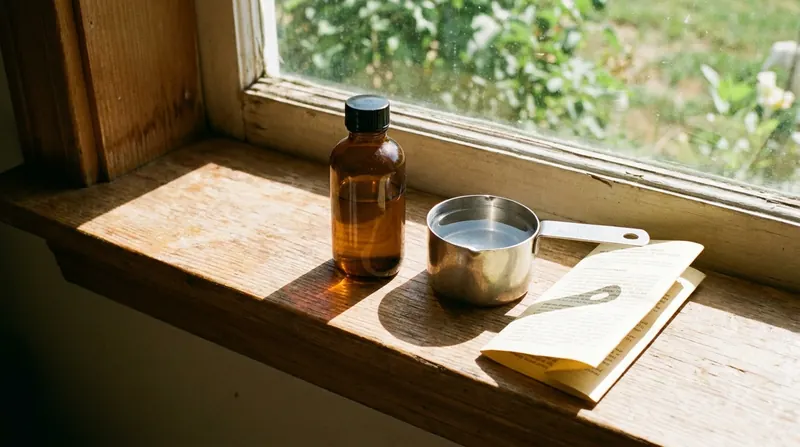
A small amber bottle, 60 milliliters, about two fluid ounces, of five herbs in vegetable glycerin and deionized water, with no alcohol.
The five, in the seller's order: St. John's wort, ginkgo leaf, rosemary, oatstraw and a vervain the listing calls "European Blue Vervain".
I did what I always do.
I read the label before the listing.
I read the trial of the main herb, then the review of all the trials of it, then what the National Institutes of Health says about it, then what the ear specialists' own guideline says about supplements for the ringing.
I read the other four herbs against whatever trials exist for them, which for two of them is nothing.
I read all sixteen reviews across the two pages of the seller's widget.
And I read the return terms, which are better than most, and the directions, which don't add up to the number of days the listing prints.
What I found is a bottle whose main herb has been tested for exactly this and didn't beat placebo, four other herbs with no ear trial between them, a label that prints no amount for any of the five, a bottle that lasts forty days rather than eighty, a caution on the label that you should read before the first drop, and a year to send it back.
One more thing before the first room, because most of you got here from one of our own advertisements.
Those ads, and the ads for every bottle like this one, talk about a cup of coffee, a salt shaker and a tone you're supposed to be able to hear.
None of that is in the bottle, and I won't pretend it is.
It's on this page, in its place: the cup, the salt and the tone test are the seventh room, and the honest version of every headline we run is in the guide linked at the foot.
Room one · The bottleAn Amber Bottle, Five Herbs on the Label, and No Number Beside Any of Them
This is what's on the table.
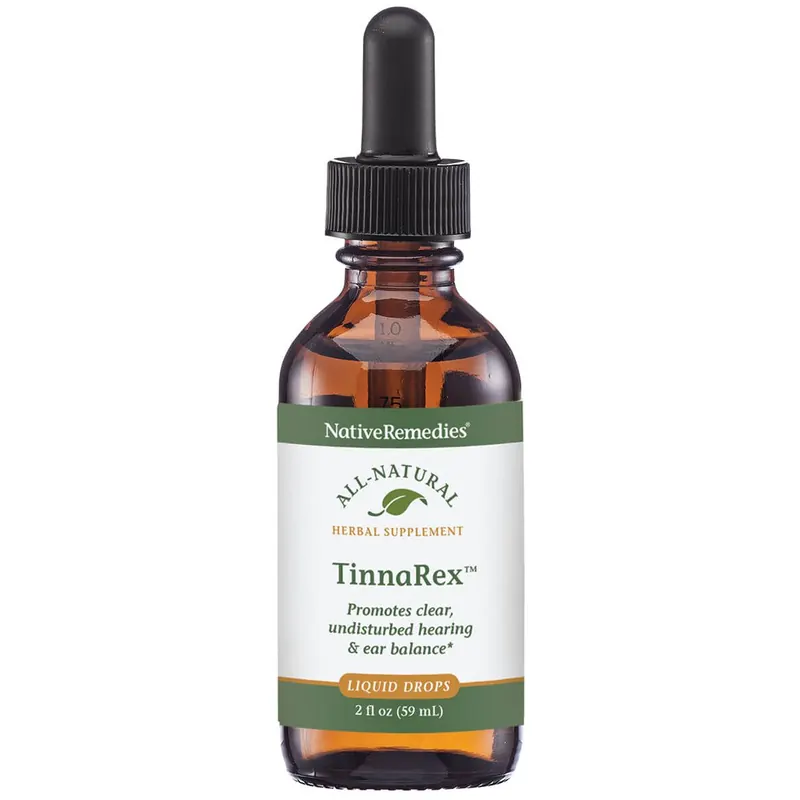
A brown glass bottle with a black cap and a small glass tube inside it, a cream label with the Native Remedies leaf, and the words "for undisturbed hearing" under the name.
Under that, the line the whole listing rests on: "Herbal supplement for healthy ears and clear, undisturbed hearing", with the asterisk every supplement carries.*
The ingredients tab lists the five herbs and says they're present "in therapeutic dosage".
It doesn't say what that dosage is: there's no panel, no milligrams, no percentage, for any of the five.
The directions: dilute the drops in a small amount of water, juice or milk, and for adults and children ten and over, half a milliliter in a quarter cup of water, three times a day.
The inactive ingredients: vegetable glycerin and deionized water, which makes this an alcohol-free extract.
The cautions, printed on the same tab, and I'll come back to them in the fifth room: not to be used with warfarin or other anticoagulants, and while taking St. John's wort, avoid excessive sun or UV light.
Five herbs, one serving size, no amounts, and a caution that names one of the five.
The main herb is the reason the bottle exists, and it gets the next room to itself.
Room two · The main herbGinkgo Leaf, the Trial of 1,121 People Who Hear a Ringing, and What the Ear Specialists' Guideline Says About Bottles Like This One
The seller singles out one of the five herbs for hearing, and it's ginkgo.
The listing says ginkgo "has been researched for its ability to support healthy hearing", and for once the sentence points at something real.
In 2001 the British Medical Journal published the largest trial there has ever been of ginkgo in people who hear a ringing: 1,121 adults aged 18 to 70 with a stable ringing, half on 50 milligrams of a standardized ginkgo extract three times a day, half on placebo, for twelve weeks. [3]
At the end, 34 of 360 people on ginkgo said the sound was less troublesome, and 35 of 360 on placebo said the same. [3]
Thirty-four on the herb, thirty-five on the placebo.
That's not a close call that went the wrong way.
That's the herb and the placebo doing exactly the same thing in more than a thousand people, and the authors wrote it plainly: no more effective than placebo. [3]

It isn't the only word on the subject.
A Cochrane review pooled four trials with 1,543 participants and found no evidence that ginkgo helps when the ringing is the main complaint. [4]
The National Institutes of Health, on its ginkgo page, puts it in one sentence: the research does not find ginkgo helpful for relieving that ringing. [5]
And the 2014 guideline of the American academy of ear, nose and throat specialists, their own professional body, recommends against ginkgo, melatonin, zinc or other dietary supplements for a persistent, bothersome ringing. [6]
Now the qualifier, because it's real and it cuts the other way.
The trial used a measured, standardized extract, 150 milligrams a day; this bottle prints no amount of ginkgo at all, and a leaf steeped in glycerin is not the same preparation.
So the honest sentence is this: the one herb in the bottle that has been tested for the ringing was tested well, in a lot of people, and did nothing the placebo didn't do.
And the bottle doesn't tell you how much of it you're getting anyway.
Ginkgo leaf: the main herb, tested on the ringing itself in 1,121 people for twelve weeks, no different from placebo, and present here in an amount the label doesn't print. The best-studied line on the label, and the study went against it.

Room three · The other fourSt. John's Wort, Rosemary, Oatstraw and a Vervain: What Each One Is, and the Ear Trial None of Them Has
Four more herbs, and I'll take them in the label's order.
St. John's wort is the yellow-flowered roadside plant of late June, and it's the first name on the label.
It has no trial on the ears, on hearing or on the ringing, and the seller cites none; what it does have is the longest list of things it doesn't mix with of any herb on a shelf, which is the fifth room. [7]
Rosemary is the kitchen herb.
The one trial I can cite for it gave 28 adults averaging 75 years old a single culinary-sized dose of dried leaf and measured how fast they remembered things, not how well they heard; a much larger dose went the other way. [8]

Oatstraw is the green stalk and leaf of the oat plant, the same grass as the breakfast grain, cut before the grain ripens.
The oat trials that exist used a concentrated extract of the milky green seed in capsules and measured thinking, with one trial finding something in adults under 65 and another finding nothing in adults around 67; [9] [10] none of them looked at the ears.
The vervain is the one I can't even name with confidence.
Blue vervain is a North American plant; European vervain is a different species; the listing says "European Blue Vervain", which is both and neither, and it has no ear trial under either name.
Four herbs, no ear trial among them, and no amount printed for any.
None of this makes the four herbs bad.
It makes them unstudied for the thing the bottle is sold for, which is a different sentence, and the one the label should carry.
Four traditional herbs, honestly described and untested for the quiet room: no trial on hearing or the ringing for any of them, one memory trial for rosemary, two thinking trials for a different oat preparation, and no amount printed for any.
Room four · The arithmeticSixty Milliliters, One and a Half a Day, and Why the Listing's "About 80 Days" Comes Out at Forty
The listing has a line I liked: "How long will a bottle last?"
The answer it gives is "approximately 80 days".
So I did the arithmetic the listing didn't.
The directions on the same page are half a milliliter, three times a day, which is one and a half milliliters a day; sixty divided by one and a half is forty.
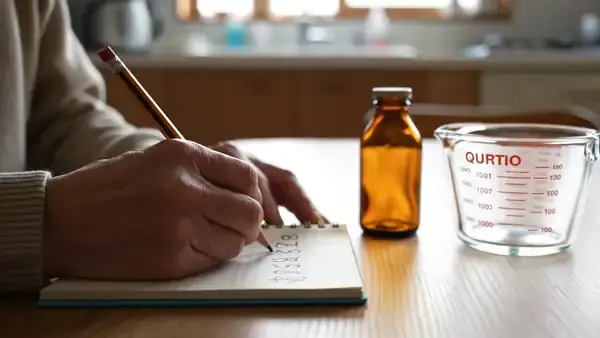
Forty days, not eighty, at the only dose the listing prints for adults.
At $39.95 a bottle that's a dollar a day, which is worth knowing before the year in the eighth room, because a year of it is nine bottles.
I don't know where the eighty came from.
A smaller dose for younger children would explain it, and the front of the listing says "Adults & Children 6+", but the directions tab only gives a dose for ages ten and over.
Forty days at a dollar a day.
A two-ounce bottle at the printed adult dose lasts forty days, not the eighty the listing says, and costs about a dollar a day. A small discrepancy, counted, and the one number on the page I could check with a pencil.
Room five · The label's own cautionThe Line About Anything That Thins the Blood, the Line About the Sun, and the List Behind Them
This is the room I'd read twice if I were you.
The label says, in its own words, not to use the bottle with warfarin or other anticoagulants, and to avoid excessive sun or UV light while taking St. John's wort.
Two of the five herbs are behind those lines: ginkgo, which the National Institutes of Health says may raise the risk of bleeding in people taking anticoagulants, [5] and St. John's wort, which is the more serious of the two.
The National Institutes of Health says St. John's wort can interact in dangerous, sometimes life-threatening ways with a variety of common daily medicines, weakening some and amplifying others, and that in large doses it can cause severe skin reactions after sun exposure. [7]
The guide at the foot of this page spells out the list, because this page doesn't name what you may be taking.
If you take anything every day, anything at all, this bottle belongs in the same bag you take to the pharmacist, before the first drop.
That isn't a line the seller wrote; it's the plain reading of the line the seller did write.
And the listing's other sentence, the one that calls the bottle entirely without unwanted effects, sits two tabs away from the caution that says otherwise.
I'll take the caution's word over the sales sentence, and so should you.
The label tells you not to mix it with anything that thins the blood and to stay out of strong sun, and behind those lines is an herb with a long list of things it doesn't mix with. Read the label's caution as the truest sentence on the listing.
Room six · The reviewsSixteen Reviews, an Average of 4.1, Two I Could Quote, One I Quote in Part, and One Star I Kept on Purpose
The seller's page shows sixteen reviews with an average of 4.1 stars: nine at five stars, three at four, two at three, two at one.
I read all sixteen, across both pages of the widget, and most of them I can't print.
Nine of them either name the condition, which our rules don't allow on this page, or say the bottle stopped the sound completely, which is a claim the trial in the second room doesn't support and I won't relay.
Two more say nothing about the bottle at all: one hadn't opened it yet, one was praising the store.
That leaves four, and I've kept all four, including the one-star.
Three carry the seller's mark of a confirmed purchase, which this page shows as a confirmed buyer; one doesn't.
Dorothy R's review names her condition in its first sentence, which this page doesn't print; her second sentence is quoted as she wrote it.
The others are quoted whole, typos and all; the small photos beside three of them are illustrations, not the reviewers.

seemed to mute the noise, somewhat

I can tell the difference if I miss taking it for a few days.

Easy to use, mu dad is happy
Have used half a bottle and still have buzzing in my ears. No change in level.
Read those the way I did.
Raphael's "somewhat" is the most honest word on the seller's page, and Dorothy's sentence is about a habit, not a measurement.
Irene bought it for her father and reports that he's happy, which is a real thing and not evidence of anything.
And the one-star reviewer used half a bottle, which at the printed dose is twenty days, and heard no change, which is exactly what the 1,121-person trial would predict. [3]
Two modest sentences, one habit, and one honest no: that's the shape of the reviews once you take out the ones that promise what the trial didn't find.
Nobody I kept describes a trial result, and for once there's a trial result to describe.

Room seven · The cup, the salt shaker and the tone testThe Coffee Our Ads Point At, the Salt They Point At, the Online Hearing Test, and the Things That Actually Hold Up
Our advertisements, and the ads for every bottle in this category, keep pointing at the same three things: a cup of coffee, a salt shaker, and a tone you're supposed to hear on your phone.
You're owed the honest version, in one room, so here it is.
Start with the cup.
The largest prospective study of coffee and the ringing followed 65,085 women for eighteen years and found that the ones who drank the most caffeine were somewhat less likely to develop it, not more. [11]
It's an observational study of younger women, so it can't tell you what your coffee is doing; what it can tell you is that the case against coffee is thin.
Up to 400 milligrams a day, about four cups, sits within the daily intake the European food safety authority raises no concern about in healthy adults; [12] the only real reason to move the cup earlier is sleep, and a bad night makes any sound louder.
Keep the coffee. Move it earlier if it costs you sleep.
The salt shaker.
Less salt is advised for one specific inner-ear condition that comes with dizzy spells, which is a question for a clinician to settle; for the ordinary ringing in a quiet room I could find no trial showing that less salt makes it quieter.
The tone test.
There is no validated hearing test on an advertising page, and there can't be: a real one is done by an audiologist, one ear at a time, in a quiet booth with calibrated equipment, and read against a look inside your ear canal, where a plug of wax can account for the whole thing. [2] [6]

Now the things that hold up, and I'll be brief, because the guide has the long version.
The ear specialists' guideline asks for a prompt, full hearing examination when the ringing is in one ear, has lasted six months, or comes with hearing difficulty, and recommends a hearing-aid evaluation when hearing loss is found. [6]
About one in three people between 65 and 74 has some hearing loss, and nearly half of those over 75, and most people who hear the ringing have some; [13] [2] hearing aids are one of the main options for people who have both. [2]
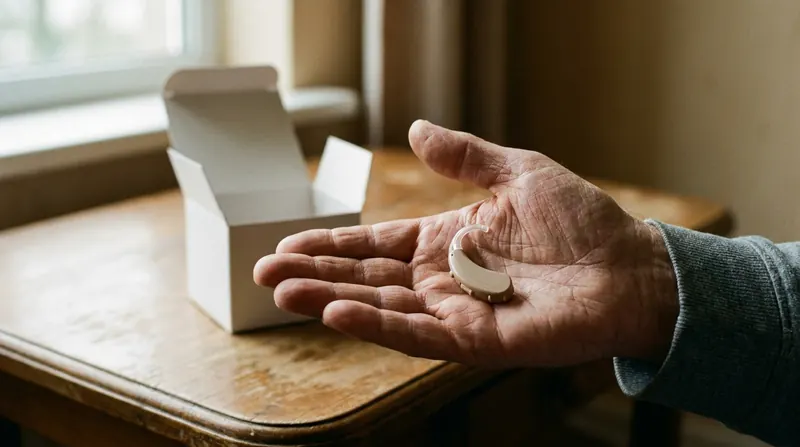
Since October 2022 an adult who thinks his hearing loss is mild to moderate can buy a hearing aid over the counter, without a fitting. [14]
Protecting what you have: long or repeated sound at or above 85 decibels, a motorcycle, a concert, headphones at full volume, can cost you hearing, and earplugs and distance are the protection. [15]
In the national survey, the ringing was about three times as common in people with steady loud noise at work. [1]
And at night, the National Institutes of Health lists the plainest thing on this page: a fan, a radio, an app playing rain, so the room isn't silent enough to hear the tone. [2]
It costs nothing, and it's the one thing in this room that thousands of people already do.
The coffee isn't the culprit, the salt is a question for a clinician, the tone test on a phone isn't a test, and the things that hold up are a hearing examination, a hearing aid when one is needed, earplugs when it's loud, and a fan at night. None of them is in a bottle.
Room eight · The yearWho Sells It, What the Year Actually Requires, and What Forty Days Can Honestly Tell You
Here's the part of the listing that's better than most.
The seller's terms give you a full year: try the bottle for at least thirty days, and if you're not satisfied for any reason, send back all the containers, opened and unopened, within a year, with your name and order number, for a refund of the price less shipping.
The address is the seller's own returns desk in Oshkosh, Wisconsin, and the seller asks you to request a return authorization first.
Those are the seller's words, and I add nothing to them.
Shipping is $7.95 for the economy option in the United States, and it's waived on the seller's subscription plan, which also takes fifteen percent off the price.
A subscription is a decision I'd make after the first forty days, not before.
So what can a bottle like this honestly offer a man who hears the tone in a quiet room?
Forty days, at a dollar a day, of five traditional herbs whose main one was tested for this and didn't beat placebo, with a year to decide it did nothing for you and send it back.
That's not nothing, and it's not much.
It's a low-cost, low-stakes trial of one, and the honest way to run it is with a notebook: a line a day on how loud the tone is at bedtime, for forty days, and then the arithmetic.
A notebook, forty days, and the year to change your mind.
But run the other test first.
Book a hearing examination, one ear at a time, in a booth, and let someone look in the canal; that's the one step on this page that can find something fixable, and it's the one the ear specialists' guideline actually asks for. [6]
If the examination finds hearing loss, a hearing aid is the thing with evidence behind it, and the bottle isn't.
If it finds nothing, and you still want to try five herbs for forty days with a year to send them back, now you know exactly what you're buying.
I've kept the honest sentence for the end, and it's the one the label should print.
This bottle supports healthy ears and clear hearing the way the label says, with the asterisk; on the ringing itself, its main herb was tested in 1,121 people and did what the placebo did; the other four haven't been tested for it at all; it lasts forty days, costs a dollar a day, doesn't mix with anything that thins the blood, and comes with a year to send it back.*
What the label lists
| Ingredient | Amount per serving |
|---|---|
| St. John's wort (Hypericum perforatum), wild-crafted flowering herb | not stated |
| Ginkgo (Ginkgo biloba), certified organic leaf | not stated |
| Rosemary (Salvia rosmarinus), certified organic herb | not stated |
| Oatstraw (Avena sativa), certified organic herb | not stated |
| Vervain (Verbena), wild-crafted herb, listed as "European Blue Vervain" | not stated |
| Inactive ingredients: vegetable glycerin, deionized water | — |
Full details on each ingredient are in the guide linked at the bottom of this page.
The label prints no amount for any of the five herbs; the serving is half a milliliter, and the base is vegetable glycerin and deionized water.
Every ingredient is explained, with its trials where trials exist, in the guide linked at the foot of this page.
Where to get it
Five herbs in a small bottle of vegetable glycerin and water, half a milliliter in a quarter cup of water three times a day, from a Wisconsin company with a one-year return window.
CHECK AVAILABILITYOne 60 mL bottle · $39.95 on the seller's page · forty days at the printed dose · a full year to send it back for a refund of the price, less shipping
One bottle at a time is the honest way to buy it.
The subscription is a decision for after the first forty days, not before.
Sold by Silver Star Brands, Inc. (Native Remedies), Oshkosh, Wisconsin · returns within one year after at least thirty days of use, less shipping
Questions readers ask
Will this bottle stop the ringing?
Nobody can honestly promise that, and I won't. The only large trial of its main herb on the ringing found no difference from placebo in 1,121 people. [3]
What the label claims is support for healthy ears and clear hearing, with the asterisk every supplement carries.
How much of each herb is in it?
The label doesn't say. The listing calls the five herbs "in therapeutic dosage" and prints no number for any of them.
Why do you say forty days when the listing says eighty?
Because the listing's own directions are half a milliliter three times a day, which is one and a half a day. Sixty milliliters divided by one and a half is forty.
Can I take it if I take something every day?
Ask your pharmacist or clinician first, with the bottle in hand. The label itself says not to use it with anything that thins the blood, and St. John's wort has a long list of interactions, spelled out in the guide. [7]
Is coffee making the ringing worse?
The one large prospective study found the opposite direction, in women: more caffeine, somewhat less ringing over eighteen years. [11]
Caffeine late in the day spoils sleep, and a bad night makes any sound louder. That's a timing point, not a reason to quit.
What should I do first, before any bottle?
Book a hearing examination, one ear at a time, and have someone look in the ear canal. That's the step the ear specialists' guideline asks for, and the one that can find something fixable. [6]
What does the year actually require?
Trying the bottle for at least thirty days, then returning all containers within a year with your name and order number to the seller's Oshkosh address, ideally with a return authorization. The refund is the price less shipping.
Who wrote this page, and why?
A writer working for the seller's advertising, under a pen name. We earn a commission if you buy through the button, which is why the page exists and why every claim on it is sourced.